Crowding, shifting, unbalanced chewing patterns, jaw joint dysfunction, and a change in your physical appearance are the undesirable consequences of tooth loss. However, many of these side-effects can be prevented or reduced when you select a tooth replacement that can perform the same duties as a natural tooth.
Implant-retained dentures: Overdentures vs Hybrid Dentures
When replacing missing teeth, modern dentistry offers implant-supported solutions that provide better stability, comfort, and confidence than traditional dentures. Two of the most common types are implant-supported overdentures and hybrid dentures. While both rely on implants for retention, they differ significantly in design, function, permanence, and cost. Understanding these differences can help you choose the replacement option that best fits your lifestyle, oral health needs, and budget.
What is an overdenture?
An implant-supported overdenture is a removable denture that attaches to dental implants placed in the jawbone. The denture snaps onto the implants with special attachments, providing significantly more stability than a traditional denture. Overdentures are designed to be removed daily for cleaning and maintenance. They are often recommended for patients who want improved chewing ability and denture retention without committing to a fully fixed restoration.
What is a hybrid denture?
A hybrid implant-retained denture is a fixed, non-removable full-arch restoration that is securely attached to multiple dental implants. Unlike overdentures, hybrid dentures are only removed by a dental professional. Hybrids combine the strength of implants with a full set of replacement teeth, offering a solution that looks, feels, and functions much like natural teeth. This option is ideal for patients seeking maximum stability, chewing efficiency, and aesthetics.
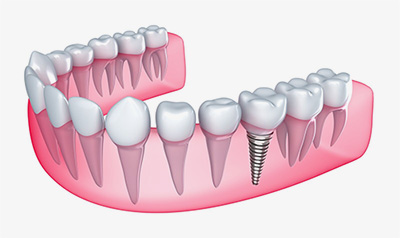
Can I benefit from implants?
Implants are appropriate for virtually any healthy adult with missing teeth. Whether the extent of your tooth loss is limited or generalized, implants can be customized to fill the void left by your real teeth. Implants are right for patients who prefer a full smile, a broad and balanced chewing surface, and those patients who are unsatisfied with their current partials, bridges, and dentures. Dental implants are even a viable option when a tooth has been missing for several years, and there is no age limit in terms of the ideal implant candidate.
What steps should I take to learn more?
Implant dentistry involves one or more surgical procedures and a significant degree of advanced planning. We would be happy to meet with you and perform a comprehensive examination in order to discuss your concerns and plan your treatment from start to finish.
Take the first step by calling to schedule your consultation today.